
CRAFTS / SEPTEMBER 18, 2026 BY STACEY SAVARESE
This post may contain Amazon affiliate links. If you buy through my links, I may earn a commission at no extra cost to you. As an Amazon Associate, I earn from qualifying purchases.
BEST BEGINNER SEWING MACHINES
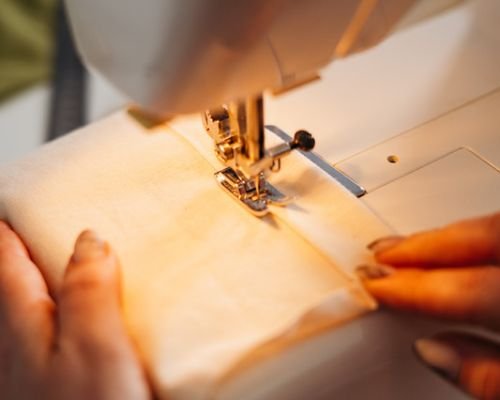
Most beginner guides count stitches.
This article examines whether a sewing machine will help you hem the pants, repair the seam, and still make you want to sit down and sew something new!
Affiliate links · Updated September 18, 2026
A beginner sewing machine should remove friction, not impress you with a hundred stitches you may never touch. The useful question is not how much the machine can do. It is how quickly it gets you from “I should fix that” to a neat hem you are happy to wear or even help family with a hem or two!
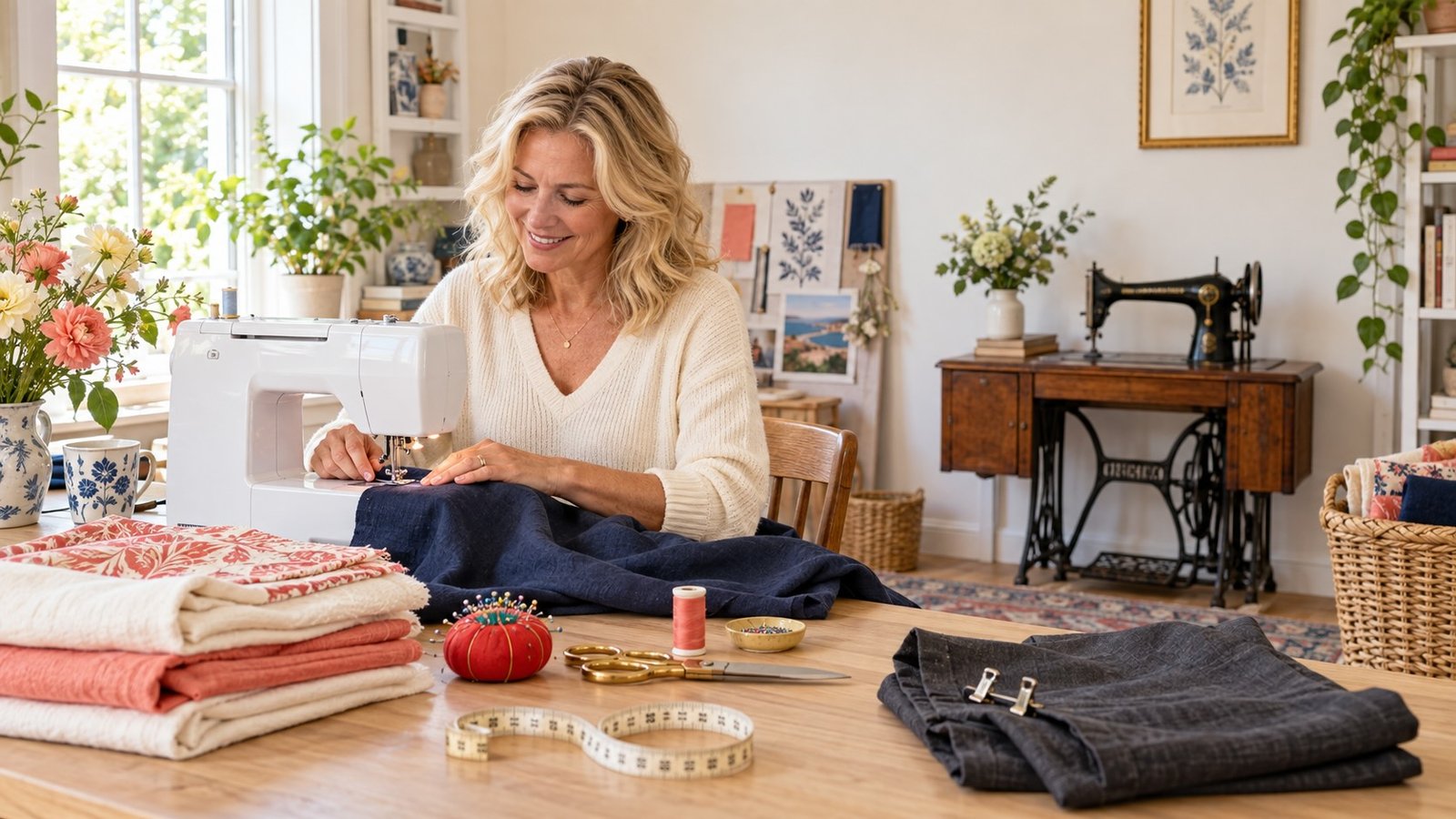
My love of sewing started beside my grandmother at one of those old iron machines that flipped down into its own table. It felt like a whole section of the world had opened. Later, sewing became the practical magic of motherhood: what I could make, what I could repair, and, as a short woman, what I could hem.
After a few moves, my own machine was broken.
Life stayed busy anyway. Now my youngest has graduated high school, the athletic schedule has loosened its grip, and, praise be, he has his own car.
I have a little more time, and I want to begin again.
I also keep thinking about the pants waiting in my closet.
When every errand costs more, paying a tailor for each simple hem can feel harder to justify.
My own measurements and the shoes I wear keep changing, too.
A machine would let me shorten a pair when I need it, repair a split seam before it grows, and make clothes fit the life I have now. Plus, I would love to be able to help my family when they need a quick hem instead of paying outrageous amounts at the tailor or seamstress.
So this is not a laboratory test or a claim that I have sewn on every machine here. It is the shortlist I have researched before I choose to buy. This is my compare and contrast of what I might choose as a first machine now. Below are seven models compared by the jobs a beginner (like you and me) is most likely to do and the features that make learning feel less like wrestling with an appliance.
The beginner sewing machine shortlist
| # | Machine | Controls | Best for | Blind hem | Amazon |
|---|---|---|---|---|---|
| 1 | Brother XM2701 | Mechanical dials | Best overall for hemming and learning | Stitch and foot included | Shop |
| 2 | Brother XM3700 | Mechanical dials | Best dial-operated step-up for frequent hemming | Stitch and foot included | Shop |
| 3 | Brother CS7000X | Computerized LCD | Best computerized step-up | Stitch and foot included | Shop |
| 4 | SINGER M1500 | Mechanical dial | Best simple Singer | Stitch available; foot not included | Find |
| 5 | SINGER M3500 | Mechanical dials | Best feature-rich dial model | Woven and stretch stitches; foot sold separately | Find |
| 6 | SINGER Heavy Duty 4511 | Mechanical dials | Best for denim and sturdy repairs | Stitch and foot included | Find |
| 7 | Janome MOD-19 | Mechanical dials | Best mechanical alternative | Stitch and foot included | Find |
The shopping links go to Amazon. For models without a confirmed exact product page, the link opens an Amazon search; check the model number, seller, included accessories, and current availability before ordering.
When does a sewing machine earn its place?
One hem probably will not repay the cost of a machine, thread, needles, and the time it takes to learn. But a stack of trousers, a couple of curtain panels, loose buttons, and small repairs can change that calculation. Ask a local tailor what the alterations you actually need would cost, then compare the total with a machine you would enjoy using. The value is not only money saved; it is being able to make a change when the garment is in your hands rather than adding another errand.
For me, frequent dress-pant hems make a blind-hem stitch and the matching guide foot worth considering. A plain straight stitch is enough for many casual hems, so no one needs to buy extra functions on principle. But if a slightly more capable machine helps me keep clothes that fit beautifully as my needs change, that upgrade has a reason behind it.
MORE FROM CHARMED CURATION
Keep Reading
11 Organizing Ideas for People Who Hate Organizing →
THE REAL BUYING RULES
Why the best sewing machine for beginners is not the one with the most stitches
Threading should be visible
Clear diagrams, an easy bobbin, and a needle threader keep setup from turning into the whole sewing session.
The useful feet count
A blind-hem foot, zipper foot, and buttonhole foot can matter more than another row of decorative stitches.
Control beats speed
Fast sounds impressive. A slow setting, a responsive pedal, and fabric you can guide without panic build confidence.
The first jobs decide
Choose for the trousers, curtains, repairs, pillows, and simple crafts you can already picture, not a fantasy list of advanced projects.
THE CONTROL QUESTION
Manual stitch dials or computerized controls?
This may matter more than whether the machine has 19 stitches or 70. A mechanical machine asks you to turn a dial to the stitch symbol or number. Depending on the model, you may also set stitch length and width with separate controls. Your foot on the pedal controls the sewing speed. A computerized machine uses buttons and a screen, usually supplies sensible starting settings for the selected stitch, and may let you cap the top speed with a slider.
Neither system does the sewing for you, and neither one guarantees a prettier hem. Both still require the right needle, thread tension, presser foot, fold, and a little practice. The better choice is the control style that removes the particular kind of frustration most likely to send the machine back into the closet.
| What changes | Mechanical dial machine | Computerized machine |
|---|---|---|
| Selecting a stitch | Turn a clearly marked dial to a number or symbol. | Use buttons and an LCD to choose the stitch. |
| Length and width | Preset on simpler machines or adjusted with additional dials. | The machine proposes defaults; you can adjust them on many models. |
| Speed | Controlled mainly by how firmly you press the foot pedal. | Often includes a speed slider that limits how fast the machine can go. |
| Buttonholes | May be a four-step process, though some mechanical models offer one-step. | Commonly one-step, sometimes with several buttonhole styles. |
| Learning feel | Direct and visible; useful if you like knowing what each setting changes. | Guided and forgiving; useful if choosing settings or controlling the pedal feels intimidating. |
| Best personality fit | “Give me a few honest controls and let me learn the machine.” | “Help me slow down, remember settings, and reduce early guesswork.” |
Why a dial can feel reassuring
There is little mystery between you and the setting. You turn to the blind-hem symbol, attach the correct foot, test a scrap, and sew. The Brother XM3700, XM2701, SINGER M1500, SINGER M3500, SINGER Heavy Duty 4511, and Janome MOD-19 all keep stitch selection tactile. For someone returning to sewing after years away, that familiarity can be comforting.
Why a screen can feel calmer
The Brother CS7000X can limit the machine’s top speed before you touch the pedal. That is not a flashy extra when you are relearning; it can give your hands time to guide a curved seam or keep a hem fold aligned. The display also confirms the stitch selection instead of leaving you to wonder whether the dial landed exactly where you meant it to.
My read for this particular restart: choose the Brother XM2701 if the simplicity of a dial makes you want to sit down and begin. Choose the Brother CS7000X if a speed-limiting slider would make you less nervous about the machine running away with the hem. The computerized model is not automatically more advanced for the user; in that one important way, it may be easier.
THE FULL COMPARISON
Seven machines, seven different ways to start
1Brother XM2701: The Best Fit for Hemming and Learning

The Brother XM2701 is the machine I would put first for a beginner who expects to hem clothes and still wants room to explore. Brother lists 27 built-in stitches, a one-step buttonhole, automatic needle threading, a top drop-in bobbin, and six included feet. Two of those feet matter especially here: the blind-stitch foot and the narrow-hemmer foot.
This is still a mechanical machine. You choose stitches with a dial and control speed with the pedal. That can be reassuring if you want the machine to feel like a tool rather than a screen. The automatic needle threader is a small kindness, especially when the light is not perfect or your eyes have decided to become part of the sewing project.
Tip: This is my best overall match for frequent hemming because both the stitch and the guiding foot come in the box. You can learn the fold once instead of first shopping for the missing accessory.
2Brother XM3700: The Dial Machine for More Than Mending

The Brother XM3700 still gives you the familiar stitch-selection dial, but with more room for the projects that follow your first repair. Brother lists 37 built-in stitches, an automatic needle threader, a top drop-in bobbin, a free arm, and a one-step buttonhole. That is a practical step up for someone who plans to shorten clothes, mend seams, and then try making something of her own.
For my pile of too-long trousers, the useful detail is not the stitch count alone. Brother includes a blind-stitch foot with the XM3700, so you have the guide for a nearly invisible hem without hunting for a separate accessory. The one-step buttonhole and needle threader also make it easier to grow beyond basic hems. It remains a mechanical machine, though: you use the dial to select stitches and the foot pedal to set your pace, rather than an LCD or speed slider.
Tip: Choose the XM3700 if you like a dial but expect to sew more than straight hems. Compare its current Amazon price with the XM2701: both include a blind-stitch foot, so the better buy is the one whose other features you will actually use.
3Brother CS7000X: The Computerized Machine to Grow Into
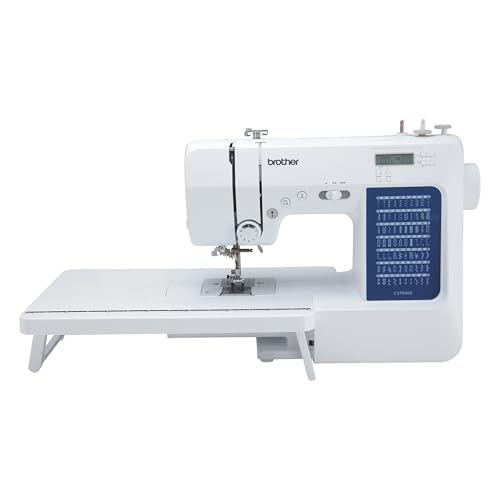
The Brother CS7000X is the step-up choice if you want the machine to help manage speed and stitch selection. Brother lists 70 stitches, an LCD, an automatic needle threader, adjustable speed control, seven one-step buttonhole styles, a free arm, and drop feed for free-motion work.
The number 70 is not the reason to buy it. The reason is control. A speed slider can let a nervous beginner set the ceiling low while learning to guide fabric. The box also includes a blind-stitch foot, walking foot, quilting foot, wide table, and hard cover. That leaves room for hemming now and quilting or home décor later without making those future projects a requirement.
Tip: Pick this over the XM2701 if slow-speed control would make you more willing to practice, or if quilting is already tugging at your sleeve.
4SINGER M1500: The Simplest Singer Alternative
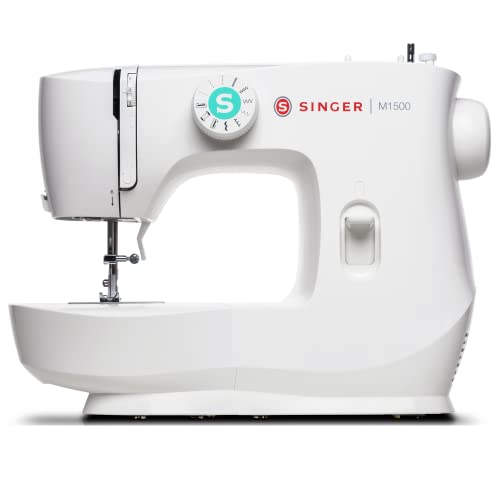
The SINGER M1500 has six built-in stitches and preset stitch length and width. Singer describes 57 stitch applications, but that phrase means techniques you can perform with the six stitches, not 57 separate stitch patterns. This is a useful bit of marketing translation when you compare machines.
It includes a blind-hem application, a four-step buttonhole, a free arm, and a durable metal interior frame. Its preset settings reduce decisions, which can feel wonderfully calm at the beginning. The tradeoffs are a front-loading bobbin and no blind-hem foot in Singer’s included-accessory list. This is the machine for someone who wants basic sewing without a dashboard and is comfortable adding a foot later.
Tip: Preset length and width are beginner friendly until you want to fine-tune a hem on an unusual fabric. Decide whether fewer decisions or more adjustment will make you happier.
5SINGER M3500: The Feature-Rich Mechanical Middle

The SINGER M3500 is the strongest compare-and-contrast partner for the M1500 because both are mechanical dial machines, but the M3500 gives you much more room to grow. Singer lists 32 built-in stitches, 110 stitch applications, a built-in needle threader, adjustable stitch length, an easy selection dial, a free arm, a one-step buttonhole, and a metal interior frame.
For hemming, its stitch guide confirms both a blind-hem stitch for woven fabric and a stretch blind-hem stitch for knits. That is a meaningful advantage if your closet includes dress trousers as well as softer jersey pieces. The important catch is the same one we found on the M1500: Singer’s standard M3500 accessory list includes the all-purpose, zipper, buttonhole, and button-sewing feet, but not the blind-hem foot. Singer lists a compatible blind-hem foot separately.
Its front-loading bobbin is also worth noticing. A top drop-in bobbin lets you see the thread supply through a clear cover and is often simpler for a new user to check at a glance. A front-loading system is not wrong, but it adds one more small setup motion under the removable storage area. In return, the M3500 offers far more stitch variety and adjustment than the very simple M1500 without asking you to learn a screen.
Tip: Choose the M3500 over the M1500 if you want tactile dials but do not want the machine’s simplicity to become a limitation. Compare its total cost with a compatible blind-hem foot against the XM2701, which includes that foot in the box.
6SINGER Heavy Duty 4511: The Repair Workhorse

The SINGER Heavy Duty 4511 makes sense when “repair” means denim, canvas, layered home décor fabric, and the occasional stubborn seam. Singer lists 11 stitches, adjustable stitch length and width, adjustable presser-foot pressure, a top drop-in bobbin, a free arm, drop feed, and a full metal interior frame.
It includes a blind-hem foot and can move very quickly. That speed is not automatically a beginner benefit. The stronger reason to choose it is the ability to adjust how firmly the presser foot holds different fabric weights. That can help when you move between a light trouser hem and thicker repairs.
Tip: Do not buy “heavy duty” because it sounds more grown-up. Buy it because thick repairs are genuinely on your list. For mostly light garments, the speed and strength may be more machine than the job needs.
7Janome MOD-19: The Thoughtful Mechanical Alternative
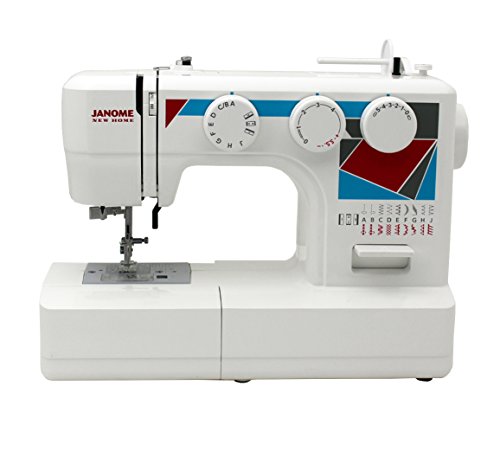
The Janome MOD-19 is the non-Brother option I would keep on the serious shortlist. It has 19 stitches, a built-in needle threader, a top-loading bobbin, a free arm, drop feed, dial controls, and a blind-hem foot included as standard equipment.
It is mechanical without being stripped bare. The dials keep the relationship between stitch, length, and width visible, which can be a good way to relearn what the machine is actually doing. Janome’s manual also gives a proper blind-hem setup with the fold riding against the foot guide and the needle just catching the edge.
Tip: This is the machine to compare directly with the XM2701 if you prefer substantial mechanical controls and want the blind-hem foot included from day one.
Do you really need a blind-hem stitch?
No, not to make a hem. Yes, if invisible hems are one of the main reasons you are buying the machine.
A straight stitch can shorten jeans, casual trousers, curtains, and many woven garments. A narrow zigzag or stretch stitch can help with some knits. A twin needle can create the familiar two-line finish seen on many knit tops. Hand stitching can make a beautifully invisible hem when you have one special garment and a quiet evening.
A blind hem is different. The machine sews mostly along the folded hem allowance, then periodically swings over to catch one or two threads of the garment. From the right side, those tiny catches should nearly disappear. It is especially useful for dress trousers, skirts, dresses, and curtains where a visible line of stitching would look too casual.
The stitch and the foot are two different things
- The blind-hem stitch creates the pattern: several stitches on the allowance, then one small bite into the garment.
- The blind-hem foot gives the folded edge a physical guide so that each little bite lands in roughly the same place.
- The folding and pressing create most of the result. A clever stitch cannot rescue an inaccurate fold.
The accessory list is worth reading as closely as the stitch list. The SINGER M1500 and M3500 offer blind-hem stitching, but their standard included-foot lists do not name a blind-hem foot. The Brother XM2701, XM3700, and CS7000X, SINGER Heavy Duty 4511, and Janome MOD-19 include the guide foot, so you can practice the fold without making another purchase first.
Charmed Tip: Practice on a scrap cut from the garment or a fabric with similar weight. Open the fold and inspect the right side after six inches. If the catches look like a dotted line, move the guide so the needle takes a smaller bite.
The stitches a beginner is most likely to use
- Straight stitch: seams, topstitching, repairs, woven hems, and most of the first month.
- Zigzag: finishing raw edges, attaching elastic, appliqué, and adding a little stretch.
- Blind hem: nearly invisible hems on dress trousers, skirts, dresses, and curtains.
- Stretch stitch: seams that need to move with knit fabric without snapping.
- Overcasting stitch: tidier raw edges when you do not own a serger.
- Buttonhole: useful when you move from repairs into clothing, bags, and pillows with closures.
Decorative stitches are enjoyable, but they should not decide the machine unless decorative sewing is already the reason you are buying it. A well-behaved straight stitch and a foot you understand will do more for your confidence than a floral border you cannot remember how to select.
What I would choose for this new beginning
For hemming, mending, and getting reacquainted with sewing without buying far beyond the plan, I would start with the Brother XM2701. It places the blind-hem stitch, blind-stitch foot, narrow-hemmer foot, one-step buttonhole, top-loading bobbin, and needle threader in one approachable mechanical machine.
I would compare the Brother XM3700 next if I wanted more stitch choices while keeping the familiar dial and an included blind-stitch foot. I would move to the Brother CS7000X if speed control would make the first sessions feel calmer or if quilting is a real next step. The SINGER M3500 is the more interesting mechanical alternative if you want a generous stitch library, adjustable settings, and a one-step buttonhole without moving to an LCD; just include the compatible blind-hem foot in the real cost of the machine. I would choose the SINGER Heavy Duty 4511 if denim, canvas, and substantial repairs are already waiting. And I would compare the Janome MOD-19 in person if the feel of sturdy mechanical dials matters more than staying with a familiar brand.
The first four projects
- Practice straight lines on two cotton napkins.
- Shorten an inexpensive pair of woven pants.
- Repair one seam that has been waiting in the closet.
- Make a simple envelope pillow cover for the room where you sew.
That is enough to learn threading, seam allowance, reverse stitching, pressing, turning corners, and one useful hem. The point is not to prove you are a sewist. The point is to make the machine part of your life before it becomes another object stored in a closet.
Once you have chosen a machine, the sewing for beginners guide will help you plan your first sessions. Keep the shopping list small with these sewing tools for beginners, including what you need now and what can wait.
Ready to put it to work? These easy sewing projects for beginners give you a practical next step, with each project building a useful skill.
Leave a Reply